A damaged-repairable car is priced differently from any other used car. The seller of a Cat S or Cat N vehicle knows it will never fetch a clean-car price, but how far below that price it should sit is anyone’s guess — and buyers, owners and anyone whose car has just been written off are all guessing from different directions.
The Salvage Bid Predictor answers one question: if this car went to a salvage auction in its category, what would the hammer price be? This guide explains what the report shows, where the prediction comes from, what it cannot tell you, and how to use it whether you are buying a Cat S or Cat N car, selling one, or dealing with an insurer’s write-off.

1. What the Salvage Bid Predictor Is
It is a single paid report inside the SortedCars Paid Check builder. You enter the registration, tick the report, and it is built while you wait and shown on screen. It costs £2.99.
The card is headed “Salvage Bid Predictor — What’s it worth at auction?” on the Paid Check page. It has one required input: you must select the salvage category from a dropdown. The prediction is adjusted for the category, so the builder will not run without it.
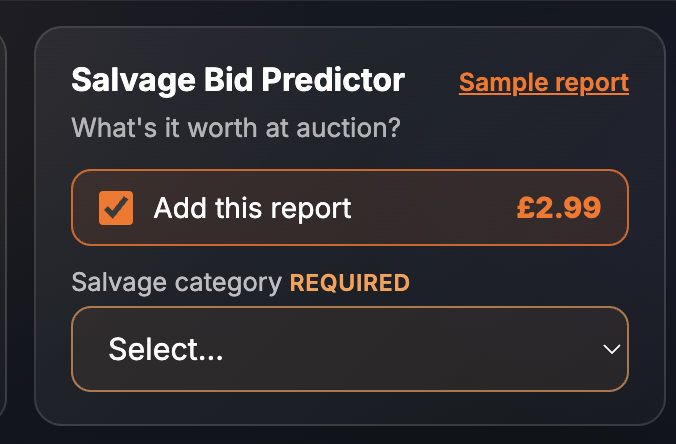
If you do not know the category, the Write-off & Salvage Check on the same page shows what has been recorded against the car. Run that first, then come back with the answer.
2. What the Report Shows
The finished report opens with the vehicle details from the DVLA and DVSA, then the Salvage Bid Predictor section. Every screenshot below is sample data from our test environment: the registration is an official DVLA test number and the bid figures and ranges are fixed test records, not a real car and not a real auction result.
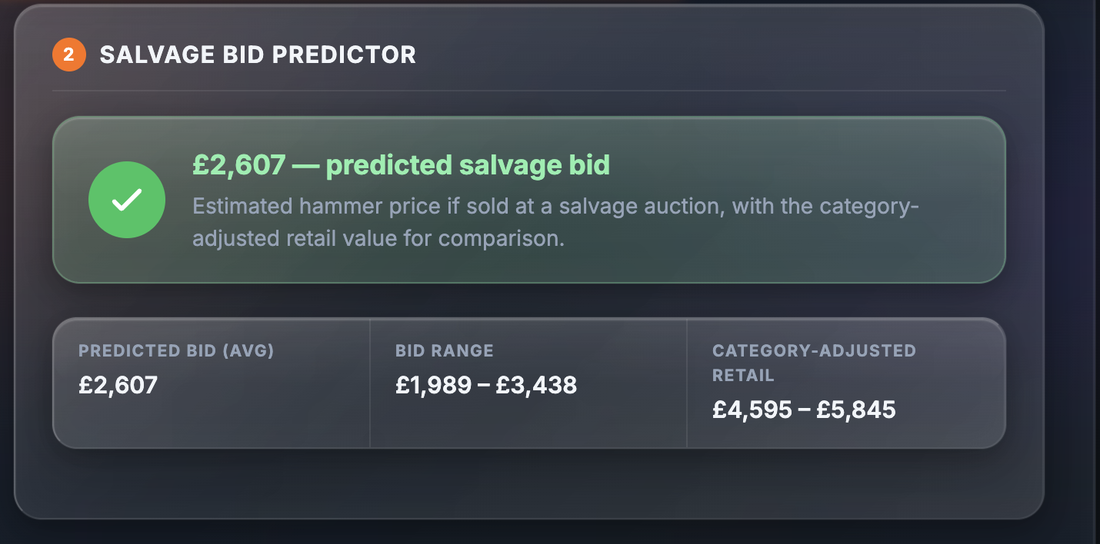
The section leads with a headline predicted salvage bid, described in the report as the estimated hammer price if the car were sold at a salvage auction, with the category-adjusted retail value alongside for comparison. Three fields sit underneath:
| Field | What it tells you |
|---|---|
| Predicted bid (avg) | The central estimate of the hammer price at a salvage auction, in the category you selected |
| Bid range (low – high) | The band the prediction expects real bids to fall within |
| Category-adjusted retail (range) | What a car of this type sells for at retail once the salvage category is taken into account — the figure to compare an asking price with |
That is the whole section. It is deliberately short: one auction estimate, one range around it, and one retail range to set it against.
3. Why It Matters
In the UK, an insurer that writes a car off assigns it a salvage category. Cat A and Cat B vehicles are for scrap or parts only. Cat S (structural damage) and Cat N (non-structural damage) can be repaired and put back on the road, and they are bought and sold openly — but with a permanent marker on the record and a permanent effect on the price.
Three groups need to know what that effect is:
- Buyers of a Cat S or Cat N car. The asking price should reflect the category. Without a figure for what the car was worth as salvage and what it is worth repaired, you cannot tell whether the discount is real.
- Owners whose car has been written off. If you want to keep the car and buy it back from the insurer, the salvage value comes into the settlement. Knowing what the salvage would fetch at auction tells you whether the figure you are offered looks reasonable.
- Sellers of a repaired car. Pricing a Cat S or Cat N car at a clean-car price will not work; pricing it at salvage value gives it away. The retail range is the honest middle.
The prediction matters because salvage prices are otherwise hard for a private buyer to find, and a seller has no reason to tell you what they paid.
4. Where the Data Comes From
The prediction is provided by SalvageGuide. It is a statistical prediction, adjusted for the category you select. The vehicle details at the top of the report come from the DVLA and DVSA.
SortedCars does not hold or create salvage predictions. We ask SalvageGuide for the figures at the moment you build the report, using the category you chose, and show you every value we receive.
5. What It Cannot Tell You
A prediction is an estimate of what an auction room might do, and auction rooms are not tidy.
- It is not an offer. Nobody is offering to buy the car for the predicted bid, and no salvage auction is bound by it.
- It is statistical. Real auction results vary with the actual damage, where the car is sold and who is bidding that day. The range exists because of that variation.
- It cannot see the damage. The prediction is adjusted for the category, not for the specific repair the car needs. Two Cat N cars can need very different work.
- It depends on the category you select. Select the wrong one and the figure is for a different car. Check the recorded category with the Write-off & Salvage Check first.
- It is not a clean-car valuation. For what an undamaged example is worth, use the Current Valuation report.
Check a Car’s Full History
Check its history before you buy — free DVLA and MOT data in seconds.
6. What To Do With the Result
If you are buying a Cat S or Cat N car: put the asking price against the category-adjusted retail range. A price at or above the top of the range needs a very good explanation, such as a documented, high-quality repair with receipts. A price near the predicted salvage bid means the car has probably not been repaired at all. Get the repair inspected before you pay, and ask your insurer about cover for a salvage-marked car before you buy.
If your own car has been written off: ask the insurer how the settlement was calculated and what salvage value they have used. Set the predicted bid against it. If you believe the settlement is unfair, complain to the insurer first; if you are not satisfied with their final answer, the Financial Ombudsman Service is the free route.
If you are selling a repaired car: price inside the retail range, say plainly in the advert which category the car is, and keep the repair invoices. A buyer who finds the category on a check you did not mention will walk away.
Whatever the category, check the car’s wider history too. MOT history on GOV.UK is free and often shows the period the car was off the road, and GOV.UK’s guide to buying a vehicle lists the documents to see. If you have been misled about a car you have already bought, Citizens Advice explains your rights.
7. Price and Where It Sits
| How to buy it | Price | What you get |
|---|---|---|
| Salvage Bid Predictor on its own | £2.99 | The predicted bid, bid range and category-adjusted retail range, plus the DVLA vehicle details |
The Salvage Bid Predictor is not included in any Car Check Pack; it is a single purchase from the Paid Check page. Prices are as shown on the site at the time of writing; the page price is always the price you pay.
Final Thoughts
Damaged-repairable cars can be good value, but only if the discount is real. For £2.99, built while you wait, the Salvage Bid Predictor gives you the two figures that define that discount: what the car was worth as salvage and what it is worth repaired.
Select the right category, set the asking price against the retail range, get the repair inspected, and ask your insurer about cover before you commit. If it is your own car being written off, use the same figures to check the settlement.
This guide provides general information and is not legal, financial or insurance advice. The Salvage Bid Predictor is provided by SalvageGuide and is a statistical prediction of a salvage auction hammer price, adjusted for the category selected when the report is built; it is not an offer, and real auction results vary with damage, location and demand. Salvage categories are assigned by insurers; disputes about a write-off settlement go to the insurer first and then the Financial Ombudsman Service. SortedCars resells the data named above and has no other connection with the providers, insurers, auctions or repairers mentioned.
Frequently Asked Questions
Check Any Car’s History for Free
MOT history, mileage analysis, and DVLA data — completely free with SortedCheck.